Showing posts with label EMF. Show all posts

Thursday, 5 September 2013

Lloyd Burrell ~ EMF Exposures Destroy Health And Well-Being, Claims Panel Of Top International Scientists

Lloyd Burrell ~ EMF Exposures Destroy Health And Well-Being, Claims Panel Of Top International Scientists

NaturalNews  August 11 2013

Nearly 8 million people worldwide die from cancer on an annual basis. Cardiovascular disease is the number one cause of death, killing almost 17 million people in 2011; both of these statistics are spiraling out of control. Now three top scientists, Dr. Panagopoulos of the University of Athens , Associate Prof. Johansson of the Karolinska Institute, and Dr. Carlo of the Science and Public Policy Institute, are sounding the alarm bell.
Leaders in their respective fields, Panagopoulos, Johansson, and Carlo, claim electromagnetic field (EMF) exposures significantly below international safety levels exposures are destroying the public’s health and well-being.

Recent study findings

This latest study concluded the present standard of measuring EMFs, Specific Absorption Rate (SAR), to be totally inappropriate. SAR measures the heating effect of EMF based technologies like microwave ovens, cell phones, cordless phones, Wi-Fi and the like. But countless studies have brought to light adverse biological effects at radiation levels significantly below levels where a thermal effect is detected.
Dr. Carlo points out the life-threatening consequences of using SAR as an exposure metric in establishing the outcomes of EMF studies:
  • “Studies which show ‘no effect’ are likely “false negatives.”
  • “Studies that show an effect are likely under-reporting the true risk.”
He goes on to say “this imprecision….shakes the foundation of the science that we are using to sort out the full range of non-ionizing radiation health effects.”

10 human bodies

At this point the real debate is moving beyond whether or not EMFs harm health and threaten public safety. Even the International Agency for Research on Cancer (IARC) has classified EMF exposure as a possible carcinogen (Group 2B carcinogen). This new research paper elaborates on just how strong these EMFs can be: “For waves emitted by a supposed unidirectional antenna it takes about 10 human bodies in sequence in order to be totally absorbed.”
Like other pioneers in the field of scientific research Dr. Carlo’s, Professor Johansson’s, and Dr. Panagopoulos’s innovative work has been scoffed at by many of their academic peers. Needless to say, their scientific evidence remains unassailable. The researchers stand 100% behind their life altering conclusions.

Scientific database on EMF research unreliable

Much EMF research is skewed by funding and research bias. A prime example of how funding influences research findings is demonstrated by a 2005 meta-analysis on cell phone studies. When comparing research findings and sources of funding, the findings were clear. The majority of industry funded studies found cell phone users had a lower risk of brain tumors; while non-industry funded studies found users had an increased risk.
EMFs not only affect cell phone users, but pretty much anyone else living in this technological age, the young, the old, and everyone else in their path. This exposure results in increased risks not only for leukemia and AD, but reproductive issues, behavioral issues, autism, neurological effects, DNA changes, certain types of cancer, and changes in the blood-brain barrier.

Basic EMF protection

Reducing personal exposure to EMFs is a fairly easy endeavor. Basic EMF protection can be achieved by:
  • Texting instead of talking with cell phones
  • Setting cell phones on airplane mode when not in use
  • Clearing the bedroom of electrical devices
  • Replacing Wi-Fi with a hard-wired connection
Taking these simple steps is well worth the effort; the power to reduce EMF exposure and the adverse health effects that stem from them are truly right there at your fingertips.
Sources for this article include
About the author: Lloyd Burrell is the author of a new ebook entitled “How To Beat Electrical Sensitivity” which offers a solution to the growing number of people whose health is being compromised by exposure to wireless and similar technologies, see www.electricsense.com/3-free-chapters.html
Since falling prey to a violent reaction to his cell phone in 2002 he has spent the last 10 years researching the effects of electromagnetic fields (EMFs) on health. He now offers a complete solution on how to live a healthy life in our increasingly electromagnetic world.

Thursday, 6 June 2013

UK introduces obligatory Smart Metering via backdoor


UK introduces obligatory Smart Metering via backdoor


  • New licensing conditions for Suppliers means “No Backwards Step” once Smart Meters installed
  • Conditions will prohibit suppliers from replacing Smart Meters with safer, more secure analogue meters, e.g. when a customer has moved house
  • Government has now reneged on repeated commitments that Smart Meters would be “voluntary”
  • Customers may be left with no choice but to use provisions of existing Gas & Electricity Acts to outmanoeuvre stealth restriction on free choice

LONDON, ENGLAND (23 May, 2013)   Early last week, Edward Davey’s Parliamentary Undersecretary, Baroness Verma, made an announcement in the House of Lords that the UK’s Smart Meter programme would be delayed by at least “one year”.  The announcement gained much attention and media exposure across the UK, but a crucial component of her announcement was seemingly omitted from all popular reports and commentary.
According to the recordings of the Baroness’s statement in Hansard (the official report of the proceedings in parliament), she revealed a second major shift in Government policy regarding Smart Meters which went unnoticed as admissions regarding delays overtook the media glare.
In a stunning and outrageous Government u-turn, Ministers have decided that from the end of this year, UK energy suppliers will be BLOCKED from fulfilling customer wishes to replace a pre-existing Smart Meter with a more safe and secure analogue alternative.  This change will be enforced through modifications to supplier licensing conditions on 14 July 2013, meaning that from the end of the year, if an energy customer moves house and finds one or more Smart Meters in situ, their supplier will not be allowed to offer analogue replacements.
From Hansard, 13 May 2013, Baroness Verma:
“We have decided that from the end of this year, when a customer switches from a supplier who has provided them with a compliant smart meter, the new supplier cannot replace that smart meter with a dumb meter and must either rent the previous supplier’s meter or install their own new smart meter… We are also proposing for consultation that, when a customer with a compliant smart meter switches supplier,the new supplier must continue to provide remote meter readings.
If you are left wondering why this generous concession has been made for Big Energy’s Smart Metering programme at your expense, the Baroness – drawing on a newly published Consultation Response document – added the following:
This will give greater confidence to early movers over their investments… this package of proposals will give consumers and industry the confidence they need for a successful rollout.  Subject to the successful completion of the parliamentary process, the licence conditions will come into force on 14 July 2013.”
This breach of public trust not only reflects a cowardly u-turn on commitments that the Government has made repeatedly that Smart Meters will be ‘voluntary’, but sends a clear message to consumers that free-choice is not compatible with the UK’s Orwellian energy policy.  It also serves to reveal the long-term, ‘war of attrition’-style intentions for Smart Metering and exposes the lie that Smart Metering is primarily aimed at serving consumers.

What’s more is that these new rules for suppliers lay the foundation for ‘ripping-and-replacing’ Smart Meters when changing suppliers – as there will be an obligation on suppliers to either “pay rent” to a competitor or take the decision to rip-and-replace the meter with their own.  In this light, it becomes impossible to resolve the contention that this programme will serve as a means of reducing energy and makes a mockery of Smart Meters making it “easier” to switch suppliers.
What may be of some interest, however, is how two pre-existing pieces of UK legislation might impact on DECC’s attempt to curtail freedom of metering choice.
In 1986 and then in 1989, the UK’s Gas and Electricity Acts were respectively brought into being.  Amongst other provisions, these Acts enshrined into law the right for individuals to have their own gas and electricity meters installed on their property.
To explain specifically in relation to electricity, for example, Schedule 7 of the Electricity Act 1989,ss.1(2) &(2A) outlines the following:
[(2) If the [authorised supplier] agrees, the meter may be provided by the customer [(who may provide a meter which belongs to him or is made available otherwise than in pursuance of arrangements made by the supplier)]; but otherwise it shall be provided by the [authorised supplier] [(who may provide a meter which belongs to him or to any person other than the customer)].
(2A) [An authorised supplier] may refuse to allow one of his customers to provide a meter only if there are reasonable grounds for his refusal.] [You can check the UK Association of Meter Operator’s website for more information.]
Our interpretation of this provision is that, so long as one’s own choice of non-smart/analogue meter complies with regulations and the supplier has no reasonable grounds for saying otherwise, any in situ Smart Meters can be sent back to the supplier.  The only reasonable grounds for the supplier refusing this request that we can envisage would be if the meter is not compliant with safety or accuracy regulation.  The issue of whether your own meter is “smart” or not seems irrelevant, and would certainly appear to have nothing to do with the Government’s “No Backward Step” policy nor its supplier-oriented licensing changes.

The Great Smart Meter Return


CAPITOLA, Calif-- About a dozen SmartMeter opponents lined up to return the controversial device, Wednesday, and when they showed up, PG&E called police.

"This is not a protest," said Joshua Hart, Stopsmartmeter.org. "This was simply returning PG&E's property to them. Property that was not wanted on people's homes."
And about a dozen people did just that at PG&E's pay center at the Capitola Mall. Joshua Hart, who is leading the push against SmartMeters said the digital meters made these people sick and were put on their property illegally, so they took them off.

"When PG&E refused to remove these devices which they never had permission to install in the first place, these people have taken matters into their own hands, hired a professional electrician or contractor to replace the SmartMeter with an analog meter," said Hart.
Bianca Carn was one of PG&E's customers who returned a SmartMeter, Wednesday.

"The bottom line is, they can't come on private property," said Carn. "I own the house, I didn't give them permission and they didn't send me a certified letter, and as you can see, we've been kicked off private property. We're not even allowed to go in there. They wanted us to come out so we did and I just feel like I wish we had the same rights."

When this group went inside to return their SmartMeters, the Capitola Police Department showed up and ordered everyone out. PG&E even closed up shop.

"I think it's disturbing that simply utility customers looking out for the health and safety of their families have to be intimidated in such a way with this turnout of police when people were happy to comply with the request to leave the offices," said Hart.

PG&E released the following statement: 

"As a matter of personal and public safety, our customers must never tamper with utility equipment. We urge our customers to call us at 1-800-743-5000 if they have questions about their gas and electric service.  We want to prevent our customers from facing the risks associated with SmartMeter removal which could result in serious harm.  Fires, burns and electrocution could occur from attempting to remove a SmartMeter.  In any instance where PG&E equipment has been tampered with or removed PG&E is obligated to end service until the situation is made safe and proper equipment is installed by a PG&E representative."

Smart meter health concerns in Australia


They call them smart meters but a growing number of homeowners disagree. They’re claiming the new power monitoring devices are actually bad for your health.


Wednesday, 29 May 2013

The effects of EMF radiation on the growth of tadpoles

Alfonso Balmori
In 2010, the noted environmental scientist ALFONSO BALMORI, studied the effects of electromagnetic radiation on the development and growth of tadpoles in the small town of Valladolid in Spain, exposing the eggs and tadpoles of the common frog (Rana temporaria) to several mobile phone antennae.

The tadpoles were placed in two tanks with oxygen and food every day, which were set out on a fifth floor terrace at a distance of 140 meters from four base station located opposite.  The base stations were on a roof of an eight story high building.

In both experimental and control groups (n+70 in each) the experiment lasted two months, from eggs phase until an advanced phase of tadpole prior to metamorphosis.  The control group was in a Faraday cage (metallic shielding component: EMC-reinforment fabrics 97442 Marburg Technic)

The studies were conducted in the field and the results were startling.


Several studies on effects of electromagnetic fields on amphibians have been conducted in laboratories.  When amphibian eggs and embyos and Ambytoma maculatum and Rana sylvatica were exposed to high magnetic fields (6.3 x 10³ G), a brief treatment of early embryos produced several types of abnormalities, including mocrocephaly, retarded (abnormal) growth, edema, and scoliosis (Levengood, 1969).

Adult newts (Notophalmus viridescens) exposed to a pulsed electromagnetic field (1 T and 0.15V/m, approx) for the first 30 days post forlimbs were amputated and produced more abnormalities in their skeletal patterns than the native limbs or the normal regenerates.  12% exhibited unique abnormalities not observed in either the native of regenerate limb population.  These forelimbs demonstrated one or more of the following gross defects: acheira (lack of carpus and digits), aphalangia, or oligodactylia _loss of digits) and well as carpel bone and long bone (radius and ulna) abnormalities (Landesman and Douglas, 1990).

Exposed frog tadpoles (Rana temporaria) developed under electromagnetic field (50Hz, 260 A/m) show an increase in mortality.  Exposed tadpoles developed more slowly and less synchronously than control tadpoles and remained at the early stages for longer.  Tadpoles developed allergies and EMF caused changes in their blood counts (Grefner et al., 1998).  These results are consistent with the observations of this work.

Deformities and disappearance of amphibians and other organisms is part of the global biodiversity crisis (Blaustein and Johnson, 2003).  Some authors consider that the  electromagnetic pollution is destroying nature (Warnke, 2007; Firstenberg, 1997), Balmori (2006) proposed that electromagnetic pollution (in the microwave and radiofrequency range) along with other environmental factors is a possible cause for the decline and deformations of some wild amphibian populations exposed.  The results of this experiment conducted in a real situation in the city of Valladolid (Spain) indicate that the tadpoles that live near such facilities, exposed to relatively low levels of environmental electromagnetic fields (1.8 – 3.5 V/m) may suffer adverse effects (low coordination of movements, asynchronous growth, and high mortality), and this may be a cause (together with other environmental factors) of decline of amphibian populations.

Digital Detox


We are surrounded by technology in everything we do, every single day.  We wake up to mobile phone alarm clocks, send texts before hitting the shower, phone friends while eating a quick breakfast and check Facebook before leaving the house.  And that’s just the hour before going to work!

Wouldn't it be nice to just STOP?  To disconnect the all pervading technology and get back to basics?  Well now you can.  There are a number of opportunities in both the USA and the UK, where you can leave all that digital noise behind!  And although the idea of ‘disconnecting’ may sound a little horrific and ‘New Age’, it could just be the break you didn't realise you needed!

We found this in Travel Weekly:

The first Camp Grounded will take place June 14 to 17 in Anderson Valley, Calif., at a former Boy Scouts camp. Some 250 campers have already signed up, and there is a wait list of more than 100 people, according to Felix. The cost is $340 per person, including open-air cabins with bunk beds (or participants can bring their own tents); all meals; and a host of low-tech workshops as well as old-fashioned activities such as archery, roasting marshmallows, hiking and sing-alongs.

And

Boutique yoga and wellness vacation company Via Yoga goes so far as to offer travelers a 15% discount off the package price if they are willing to give up their cellphones, tablets and laptops.

“We decided, let’s make it a challenge and incentivize some of our guests,” said Via Yoga owner Suzie Cavassa.

The company provides an emergency contact number that guests can give friends and family who might need to reach them, then confiscates their devices. The accommodations don’t have TVs or radios in the room. Cavassa said that only about 10% of guests take advantage of the digital detox program.


And it’s not just summer camps that are offering these getaways.  The Westin Dublin offers the chance to ‘liberate yourself from your smartphone, laptop and gadgets and replacing all that digital clutter with relaxation, renewal and a few thoughtful touches’. They also offer as part of the package, ‘A handy Detox Survival Kit, featuring information on discovering the city of Dublin and a walking map,  a newspaper (real, not virtual!), a relaxing white tea candle, a board game and a tree planting kit to take home with you.’.

I don’t know about you, but I know where I’m going for my next holiday!

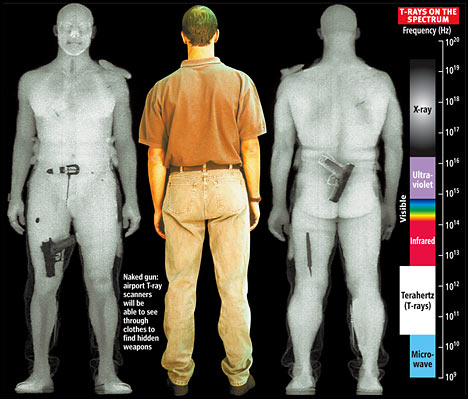
TSA Finally Investigating Cancer Risk of X-Ray Body Scanners


Lingering questions on the safety of backscatters have forced the TSA to commission an independent study.

Following months of congressional pressure, the Transportation Security Administration has agreed to contract with the National Academy of Sciences to study the health effects of the agency's X-ray body scanners. But it is unclear if the academy will conduct its own tests of the scanners or merely review previous studies.

The machines, known as backscatters, were installed in airports nationwide after the failed underwear bombing on Christmas Day 2009 to screen passengers for explosives and other nonmetallic weapons. But they have been criticized by some prominent scientists because they expose the public to a small amount of ionizing radiation, a form of energy that can cause cancer.

The scanners were the subject of a 2011 ProPublica series, which found that the TSA hadglossed over the small cancer risk posed by even low doses of radiation. The stories also showed that the United States was almost alone in the world in X-raying passengers and that the Food and Drug Administration had gone against its own advisory panel, which recommended the agency set a federal safety standard for security X-rays.

The TSA maintains that the backscatters are safe and that they emit a low dose of X-rays equivalent to the radiation a passenger would receive in two minutes of flying at typical cruising altitude.

Sen. Susan Collins of Maine, the top Republican on the Senate homeland security committee, introduced a bill mandating such a test earlier this year.

"I am pleased that at long last the Transportation Security Administration has heeded my call to commission an independent examination into the possible health risks travelers and TSA employees may face during airport screenings," she said in a statement Monday night.

According to a brief contract notice posted on a government procurement website, the National Academy of Sciences will convene a committee to review previous studies to determine if the dose from the scanners complies with existing health and safety standards and to evaluate the TSA's methods for testing and maintaining the machines.

Collins' office said the language in the contract notice wasn't final and that the study would be consistent with the senator's calls for an independent investigation. TSA spokesman David Castelveter added, "Administrator [John] Pistole has made a commitment to conduct the study and TSA is following through on that commitment."
Still, it's unclear how much the study that the TSA is proposing will add to what's known about the machines, mainly because it's not known if the National Academy of Sciences will conduct new tests or confine itself to examining previous studies. In the past, TSA has contracted with the Food and Drug Administrationthe Johns Hopkins Applied Physics Laboratory, and the Army Public Health Command to test the scanners. All three studies found the radiation was in line with a voluntary standard set by an industry panel that included FDA scientists.
2012 study by the Department of Homeland Security's independent watchdog supported the findings but based its report on previous tests performed by the TSA and the other groups.

This fall, the TSA began replacing the X-ray body scanners with millimeter-wave machines—a technology radiation experts consider safer—at most of its biggest airports. The TSA said the move was done to speed up lines and that the X-ray scanners would eventually be redeployed at smaller airports.


Europe has prohibited the X-ray scanners while Israel, which is influential in the security world, has recently begun testing them.

The TSA study will not address privacy, cultural, or legal concerns that have been raised by the scans, the contract notice said.

This story first appeared on the ProPublicawebsite.

Friday, 17 May 2013

Unbelievable

I can't do a blog about EMF without mentioning the fantastic British band of the same name, who had numerous hits in the 1990's.

"Unbelievable" was their biggest hit, a song originally appearing on their debut album Schubert Dip. It was released as a single in the UK in 1990, peaking in the UK Singles Chart at number three on 1 December 1990. It was the 32nd best-selling single of 1990 in the UK. In the United States, it hit number one on the Billboard Hot 100 on 20 July 1991; if one counts a #1 twice if it had two runs at the top (analogous to the official system of numbering U.S. presidents), it was the 1,000th #1 in Billboard history.  The song contains samples of US comedian Andrew Dice Clay throughout the track, including the loud exclamation of "oh!" at the start of each chorus along with the words "it's unbelievable" spoken during the bridge. The track was produced by Ralph Jezzard.

Thursday, 25 April 2013

Electrosensitivity: is technology killing us?


Tim Hallam

Tim Hallam, 36, sleeps in a custom-made silver-coated sleeping bag that helps block out electromagnetic fields. Photograph: Thomas Ball


Tim Hallam is just tall enough to seem gangly. His height makes the bedroom feel even smaller than it is. Muddy sunlight filters through the grey gauze hung over his window. His narrow bed appears to be covered with a glistening silver mosquito net. The door and the ceiling are lined with tinfoil. Tim tells me there is also a layer of foil beneath the wallpaper and under the wood-effect flooring. He says, "The room is completely insulated; the edges are sealed with aluminium tape and connected with conducting tape so I could ground the whole room. It's a Faraday cage, effectively. Grounding helps with the low frequencies radiation, apparently. The high frequencies just bounce off the outside."
Tim is trying to escape atmospheric manmade radiation caused by Wi-Fi, phone signals, radio, even TV screens and fluorescent bulbs. It's a hopeless task, he admits: "It's so hard to get away from, and it's taken a toll on my life." I offer to put my phone outside the room and he happily accepts, firmly closing the door. He explains the phone would have kept searching for a signal. "And because it wouldn't find one, it would keep ramping up." With the tinfoil inside his cage, the signal would hurtle around the room like a panicked bird.
Tim estimates he spent £1,000 on the insulation, taking photographs at every stage to share with others via ElectroSensitivity UK, the society for sufferers. He found the whole process stressful, especially after a summer sleeping in the garden of his shared house in Leamington Spa to escape a new flatmate's powerful Wi-Fi router. How did he feel about the flatmate at the time? "Oh, I hated him. It wasn't really him, of course. But I was so angry." Among the symptoms Tim experiences – headaches, muscular pain, dry eyes – there are memory lapses and irritability. He now says his bed is the single most important thing he owns. "I climb in and zip it up so I'm completely sealed. Inside, I sleep extremely well. Without it, my sleep is fragmented, and without sleep, then lots of other things go wrong."
Tim demonstrates the effectiveness of the tinfoil using a radiation detector called Elektrosmog, manufactured in Germany. It is blocky and white, which makes it look both retro and futuristic. On the front of the box, a picture of an electricity pylon is surrounded by jagged black lightning flashes. The machine gives a reading close to zero: Tim's room is radiation-free.
As a child in the 70s, I watched a BBC science-fiction serial called The Changes, which imagined a future after humans became allergic to electricity. Pylons were the greatest danger, making people violently sick. On cross-country runs, I would speed up when I had to pass beneath a power cable, feeling the weight of the buzzing electricity above me. The idea that electromagnetic fields affect our health took root in the 1960s. A US doctor named Robert O Becker became the face of the campaign against pylons after appearing on the US TV show 60 Minutes. Professor Andrew Marino, now of Louisiana State University, was Becker's lab partner. Marino says, "He's the reason nobody wants to live near power lines."
If electromagnetic radiation is dangerous to humans, there are far more risks now than 40 years ago, thanks to the telecommunications industry. More than a billion people worldwide own mobile phones. In the UK, there are more mobile contracts than people. The new 4G spectrum will cover 98% of the country, erasing all but the most remote "not spots".
Dr Mireille Toledano runs Cosmos, a 30-year, five-nation study into the effects of telecoms radiation on humans. She knows how rapidly things are changing. In 2000, a 10-year study into mobile phones and brain tumours pegged heavy use at 30 minutes a day. The study found the 90th percentile had spent 1,640 hours of their lives on their phones. In the UK, Toledano says, "heavy use is now defined at 86 minutes a day; 30 minutes is in the median range. Across the whole [international Cosmos study], the top 10% of users have now clocked up 4,160 or more hours."
The earlier study found no evidence linking phone use and cancer in the short term, yet as our love affair with technology keeps deepening, anxieties grow. Two years ago, the European Assembly passedResolution 1815, which, among other things, calls for restrictions on Wi-Fi in schools and the use of mobile phones by children. The World Health Organisation has classified electromagnetic fields of the kind used in mobile telephony as Group 2b carcinogens – that is, as possibly cancerous.
The issue of electromagnetic sensitivity is immediately political. It places sufferers on the other side from both industry and the governments that profit from leasing wavelengths. Over and over, I hear the phrase, "We are the canaries in the coal mine": sufferers believe we are approaching a tipping point. Tim Hallam worries about the effects of electromagnetic fields on the most vulnerable: on his sister's young family; on children in schools bathed in Wi-Fi rays; or old people in sheltered accommodation, each with their own internet router. "I think it's affecting everyone's cells. There are test-tube experiments which show it damages DNA and affects the blood-brain barrier. I do think there's going to be a surge in the people who are sensitive in years to come. But my sister's not fully taken that on board."
Yet electro hypersensitivity syndrome is controversial. Sweden recognises EHS as a "functional impairment", or disability, but it is the patients, not doctors, who make the diagnosis. The fact is, everyone who suffers from EHS is self-diagnosed – and each has their own story to explain the cause of their problems.
Tim was 16 years old, at a gig by the industrial band Sheep on Drugs, when the singer produced a pistol and fired blanks into the ceiling. Tim, who is now 36, says, "It was the loudest thing I had ever heard." His ears began ringing but he continued going to gigs without using ear plugs and the problem grew worse. He played clarinet in two orchestras but had to stop: "Immediately, my musical life and my social life ended." Today, his sister is a professional classical musician. Tim, a Cambridge graduate, is a van driver for Asda. He works shifts that allow him time alone when his flatmates are out and the house is free of Wi-Fi and phones. It was the arrival of Wi-Fi in his house, just 10 months ago, that led Tim to identify the cause of his problems, but it was the tinnitus that started it all.
Michelle Berriedale-Johnson
Michelle Berriedale-Johnson, 65, is wearing a jacket made from a silver-coated material that reduces the strength of electromagnetic fields. Photograph: Thomas Ball

Michelle Berriedale-Johnson has worked in the field of food intolerances and allergies for more than 20 years. She runs the industry awards for "Free From" foods from her home in north-west London, as well as foodsmatter.com, a website that raises awareness around food intolerances. Five years ago, at the age of 60, she began to feel unwell. She was sitting at her desk when she identified the cause. "I looked up and there was the Royal Free Hospital with the phone masts on the top, beaming straight through my window, and it just clicked." Michelle is bright and lively, happy to dive beneath her desk to show the precautions she has taken to shield herself from the spaghetti of wires. Her walls are painted with carbon paint, lined with foil and papered over. The windows have the same netting as Tim's, though when she uses her Elektrosmog meter she discovers to her consternation that the netting is old and no longer works. Her front rooms buzz with electromagnetic radiation, though her office – now at the back of the house – shows far better readings. She says, "I'm lucky to work from home, but I often feel like a prisoner." When she leaves the house, she wears hats lined with material similar to Tim's mosquito netting and even has blouses made of the same material. "The important thing is to protect your head and upper torso," she says.
Michelle precisely identifies the moment she became sensitised to radiation. She was an early user of mobile phones. "Do you remember the type with the little aerial? I had one where the antenna had broken off, but I continued to use it pressed to my ear, which people who know tell me meant that I was using my entire head as an aerial." In her view, we are all sensitive to electromagnetic fields, but events can tip us over into hypersensitivity, like a kitchen sink filling so fast that the overflow becomes overwhelmed and water cascades to the floor.
The problem, in clinical terms, is that "hypersensitivity" refers either to allergies or to auto-immune conditions. EHS may be like hay fever or, in extreme cases, like rheumatoid arthritis but only via analogy. If we speak of "hypersensitivity" we are using a metaphor – or we are talking about something entirely new. Does this "new" condition exist?
Long-time researcher Dr Olle Johansson, from Sweden's Karolinska Institute, coined the term "screen dermatitis" to explain why computer users in the depths of the Stockholm winter could complain of sunburn-like symptoms. Johansson has a theory that could explain how extremely high levels of radiation could affect histamine levels in cells. Yet telecoms radiation is low and becoming lower as gadgets become more efficient. Johansson acknowledges that if anyone is found to be truly allergic to their phone it would be an entirely new kind of allergy, but he hopes that an awareness of EHS will lead to revolutionary changes. "In Sweden, we take accessibility measures seriously for disabilities. You think of changes to sidewalks, or wheelchair access, or ramps on buses. These are also helpful to mothers with prams, people with shopping or to rollerskaters. The big winner is everyone." Similarly, he believes that cutting off the telecoms signals would not only help EHS sufferers, it would benefit all of us, returning us to a society based on face-to-face human interaction.
Dr James Rubin of King's College Institute of Psychiatry is adamant EHS is not a genuine syndrome. "With most conditions, patients don't necessarily know what's going on. But with electrosensitivity there's an absolute certainty about the cause. Self-diagnosis is at the core of it." He prefers the term "idiopathic environmental intolerances", or IEI, which covers conditions with no obvious cause, like multiple chemical sensitivitysick building syndrome, food intolerances – even a physical reaction to wind turbines. "The problem is, if you look for a coherent set of symptoms, you are not going to find it. You even find that people's symptoms change over time. Many have other intolerances in addition to the electrical sensitivity."
Tim is intolerant to milk and gluten. He is also allergic to wool, and cannot sleep in a room with a carpet. Michelle has no intolerances but admits she is unusual in the community: "Most people do." She made her diagnosis because she was familiar with EHS through her work. She is familiar with Rubin's research and has written blogs condemning his methods: "These stupid so-called provocation studies where they place a mobile in your hand and ask if you feel unwell. And if you say yes, they go, ho-ho, the phone wasn't switched on." These tests pay no attention to the way that people are sensitised, or react to their sensitivity in different ways, she believes.
Rubin is a bogeyman in the electrosensitive community thanks to a 2008 paper that suggested the condition was psychosomatic. Yet he has also undertaken a review of all the research – more than 50 provocation studies – and found no evidence of sensitivity to telecoms radiation. He says, "The suffering is very real – I don't doubt that – and I take it very seriously. But we've spent millions on the research and the time comes when you have to say, in the future the money would be better spent on looking for effective treatments, rather than chasing a cause."
Professor Andrew Marino is less sceptical. "When people say they feel unwell and trace that to a Wi-Fi signal or a phone, that is a kind of experiment. It may not be well designed, they may not understand blinds and double blinds, but if they are reasonable people, carefully noting what they are suffering, we should take a look at that."
Marino was a first-year postgraduate in 1964 when he began working with Dr Robert Becker. Once he and Becker began campaigning against electricity pylons, their funding disappeared. Becker retired at the relatively young age of 56. Today, Andrew Marino will not look to industry for research funds. He has reviewed many of the same 50 papers on EHS as Rubin, concluding, "It's easy to find nothing." The common denominator he identified in the papers casting doubt on EHS is that they were funded by the telecommunications industry.
EHS sufferers have criticised Rubin's research because it is funded jointly by mobile phone companies and government. They believe this shows direct bias. Marino's criticism is different. He recognises Rubin's money was placed in a fund and administered by scientists separate from the industry. Yet, he argues, the industry approves funding because statistical modelling of large-scale studies averages out experiences and produces no clear-cut results. Big business is happy to back risk studies, but they favour projects that minimise risk: "You look at the statistics and see the way they design the experiments and they have no ability to find anything."
Rubin's research is statistic-driven. If Rubin is a pollster, then Marino is a canvasser. He believes vast overviews hide the way people really feel. Marino chose to focus on a single sufferer, a female doctor. His two-week study began by first discovering which wavelengths affected her. Once her symptoms had subsided, Marino and his team began again, using provocation studies of real and fake signals. Their results were published as Electromagnetic Hypersensitivity: Evidence For A Novel Neurological Syndrome.
Marino and Rubin have exchanged a series of letters about the study in the Journal Of Neuroscience. If the research stands up, Marino's syndrome is novel because it is unlike other kinds of hypersensitivity. In truth, it depends upon singularity. Marino speaks urgently: "I'm not interested in measuring the prevalence of the syndrome. I want to establish its existence." In his view, humans – complex living organisms – are all different. In the economy of our bodies, Marino says, "causes becomes effects and effects becomes causes which become effects, and so on". It is an endless and unpredictable cycle.
So should we all make radical lifestyle changes, like cutting down our mobile phone use or getting rid of our Wi-Fi?
"Why?" Marino sounds perplexed.
"Because we might get sick."
Marino dismisses the idea. He may disagree vehemently with Rubin, but he views EHS sufferers as outliers, far removed from the average human experience and with few lessons for the rest of us. "Listen, I use an ear bud with my phone, and I minimise use. I don't know if you'd call it radical but I don't have acute reactions to anything. So there's nothing for me to worry about."

Wednesday, 10 April 2013

FCC & Cell Phone Industry: A Cozy Relationship


The Federal Communications Commission (FCC) has never levied a fine against a cell phone company for exceeding its RF exposure limits from a base station antenna.
That's not because all of the 300,000 cell sites in the U.S. comply with the FCC rules, according to an Industry Insider with years of training and experience measuring RF radiation. He told us that he has found RF levels higher than those allowed under the FCC rules at sites across the country. The real reason there have been no fines, he said, is "because there's collusion between the companies and the government." The insider, an RF engineer, calls himself "EMF Expert"; he asked that his real name not be used.
"The carriers and the FCC have an extremely cozy relationship," said the engineer. "Whenever there's a problem, someone in the FCC's RF safety office warns the carrier and the company then puts the 'fire' out."
Over the last two years, the RF engineer and the EMR Policy Institute, based in Marshfield, VT, have identified more than 100 rooftops in 23 states where the FCC's limits have been exceeded. Back in December 2011, the Institute described the situation to the chairman of the FCC, Julius Genachowksi, and the other commissioners. These findings are "shocking," the leaders of the Institute wrote, and point to "a systematic pattern of non-compliance" by the country's largest providers of cell phone service. Nothing much has changed since then.
When the radiation limits are exceeded, it's most likely close to the transmitting antenna. The strength of RF signals, like all types of electromagnetic radiation, decreases quickly with distance from the source (the inverse square law). For most freestanding cell antenna towers, the "hot" zone —where RF levels are higher than the exposure limits— is usually inaccessible, but for roof-mounted antennas, public access is not uncommon. The FCC requires that such hot zones be roped off and warning signs posted. Most cell sites are composed of multiple antennas, with some pointing in different directions. Different carriers will often place their antennas on the same site, a process called colocation.
The people most at risk of RF overexposure are those working on rooftops close to the cell phone antennas. As the EMR Policy Institute wrote to the FCC commissioners:
Workers such as roofers, window washers, painters, HV/AC technicians, building engineers and superintendents, firefighters, wireless industry workers, and others have been and continue to be concerned that their safety and health have been and continue to be compromised by exposure to RF radiation in excess of lawful limits. 
Enforcement Is a “Total Illusion”
"Enforcement at the FCC is a total illusion," Deb Carney, a director of the Institute, toldMicrowave News. "The public is not being protected." Carney is an attorney practicing law in Golden, CO.
More than 100 instances of antennas exceeding the FCC limits have been reported toMichele Ellison, the head of the FCC's Enforcement Bureau, according to Janet Newton, the Institute's president. "To the best of my knowledge, the FCC has not taken any enforcement action," Newton said, "Neither Ms. Ellison nor anyone from her office has ever even acknowledged our complaints."
Ellison declined to comment, referring questions to Mark Wigfield in the FCC media office. "We routinely investigate RF complaints," Wigfield told us, "We take action where warranted by the facts and the commission's RF standards." When asked about the 100 violations reported by the EMR Policy Institute, Wigfield did not respond.
(In fact, in the last dozen years, the FCC has taken few enforcement actions for any type of RF source, including the much more powerful antennas broadcasting radio and TV signals, as shown in this list compiled by the FCC.)
The Industry Insider estimates that about 10% of all cell sites are on rooftops (the fraction differs from one carrier to another). And of that 10%, about 10% are out of compliance. This works out to about 1% of all cell sites being non-compliant. "It's a small percentage," he said, "but when you consider that there are some 300,000 sites out there, it is a significant number."
Asked why he was blowing the whistle on the cell phone industry for which he has long worked, the Insider replied: "Nobody is enforcing the law. You can argue about thermal and non-thermal effects until the cows come home, but these violations are not lawful and the rules should be enforced."
"Without enforcement, there can be no compliance," he said.
The Insider does not see the package of rules and proposals issued by the FCC last week as sufficient to deal with the lack of compliance on rooftops. "The section on mitigation is too ambiguous," he said. "The FCC appears to be only interested in making changes that do not add new costs for the carriers, he added, but that will not solve the problem."
"They can fix this if they want to, it's not that hard," said the Insider. "The situation is completely different in Canada and Europe. They take this seriously."
Noel Gail’s Roof in Queens New York
The EMR Policy Institute points to what happened on a rooftop owned by Mr. Noel Gail as an example of the cozy relationship between the FCC and the cell phone carriers. The story begins about three years ago, in March 2010, when Gail wanted to repair the roof on his two-storey building in Queens Village, New York City. On seeing cell phone antennas on the roof of an adjoining building, he called the toll-free number he spotted on a warning sign posted by AT&T. "I called that 800 number a few times, but it was a dead end," he told Microwave Newsnot long ago.
Antennas on Noel Gail's Rooftop in Queens Village, NY
The Roofop Next to Noel Gail’s in Queens Village, NY
Gail then started calling the FCC. "After six or seven calls, I left a message on an FCC answering machine saying that I was going to call a local TV station and my attorney," he said. "But I was bluffing, I did not know any reporters and I did not have a lawyer. I just said that to get their attention." The bluff worked. Two months later, on May 11, a five-man team from the FCC made a site visit. They found the RF levels on Gail's roof near an antenna operated byMetro PCS, which was also located on his neighbor's roof, to exceed the FCC limit by 60%.
On November 10, 2010, the FCC issued Metro PCS a formal Notice of Violation. This is theonly NOV that the FCC has ever issued for an RF violation from a cell phone antenna. The AT&T antennas were found to comply with the RF rules and the company was not cited by the FCC.
Even though AT&T had not responded to Gail's calls, it moved quickly once alerted by the FCC. Microwave News has learned that soon after Gail left that message on the FCC's voice mail about contacting the media, word reached Donald Campbell in the FCC Office of Engineering and Technology. The EMR Policy Institute calls Campbell, "The Gatekeeper," the one who decides who gets the agency's attention. Gail must have passed the test. Campbell sent a message to AT&T, and the company sprung into action as the antennas on Gail's roof rose to a priority issue.
We asked Michele Ellison, the FCC enforcement chief whether anyone from the FCC had ever gone back to Mr. Gail's roof to check whether Metro PCS was now in compliance with the FCC rules. Ellison did not respond, nor did Mark Wigfield of the FCC media office. 
The FCC did not fine Metro PCS for exceeding the commission's RF radiation limits. No one has explained why.
The EMR Policy Institute returned to Gail's roof with an experienced RF engineer about a year after the FCC issued the notice of violation. They found that the RF levels near the Metro PCS antenna were close to three times the FCC limit and the RF levels near the AT&T antenna were more than five times the allowable limit.
"I am not an engineer and I can't prove it," Gail told us, "but my feeling is that AT&T lowered the power on the antennas before the FCC arrived and then boosted it after they left."
Evie Hantzopoulos, the executive director of a New York City non-profit and a sometime cell antenna activist, tells a similar story about dealing with the FCC over a rooftop antenna some years ago. “T-Mobile constructed antennas directly facing the adjacent roof of a property next door. You could go up to the roof and walk right up to them,” she told us. “It took calls, emails, letters and more to get the FCC to inspect the site. Once a date was set, T-Mobile was notified. Then, two days before the visit, the antennas were taken down. That was the end of the story, even though we had pictures of the violation.”
“The FCC's approach to enforcement is so laissez-faire, it amounts to incompetence,” Hantzopoulos said.
No Help from the Carriers’ Toll-Free Help Lines
The EMR Policy Institute has posted two videos that describe the rooftop RF problem on YouTube ("Wireless Safety Failure Part I" and "Wireless Safety Failure Part II"). Each is about 15 minutes long; the second includes footage filmed on Gail's rooftop.
Some of the most striking parts of the videos are what workers are told when they call the toll-free numbers posted on warning signs near cell phone antennas. Most of the operators responding to the calls appear to be ill prepared to answer the workers' questions. All too often they are quick to reassure the workers that there is nothing for them to worry about.
Richard Tell, a consultant with extensive RF experience, was not surprised by what he heard on the videos. "It happens over and over again," he said in interview from his office in Colville, WA. "The telephone operators don't know diddly-squat about the RF problem."
In a December 11, 2001 letter to the FCC's Ellison, the Policy Institute urged the Enforcement Bureau to "investigate the type and veracity of the information provided to those who called."
Last July, David Dombrowski of the FCC's Enforcement Bureau in Philadelphia wrote to Janet Newton of the Policy Institute asking about operator responses to the toll-free numbers. She then sent him recordings, which the Institute had made from calls to AT&T, Metro PCS, Sprint, T-Mobile and Verizon. "That was the last I heard from him," Newton said. When contacted byMicrowave News, Dombrowski wrote back that he could not comment because he was not authorized to speak to the media.
The Institute's Deb Carney wants the FCC to get tough with the industry. "The problem is that the FCC is colluding with the cell phone carriers and the result is lax enforcement," she said.